Handling Your Personal Selfish Life. Part 2
Livestream: youtu.be/t_mks6bMgYs
Opening worship – silence, focus, and corporate glorifying
- Invitation to sit in silence before God to focus on him.
- Corporate declarations of worship: acknowledging Christ as Lamb, worthy of praise, honor, and worship.
- Thankfulness for God’s unchanging nature, strength, and faithfulness.
- Calls to lift lives, hearts, and attitudes in worship rather than merely singing songs.
- Invitation to stop, be still, and know the Lord so his plans and revelation can reach us.
Psalm 103:1 Praise the Lord, my soul; all my inmost being, praise his holy name. (NIV)
1 Chronicles 29:10-13 David praised the Lord in the presence of the whole assembly, saying, “Praise be to you, Lord, the God of our father Israel, from everlasting to everlasting.” Yours, Lord, is the greatness and the power and the glory and the majesty and the splendor, for everything in heaven and earth is yours. Yours, Lord, is the kingdom; you are exalted as head over all. Wealth and honor come from you; you are the ruler of all things. In your hands are strength and power to exalt and give strength to all. Now, our God, we give you thanks, and praise your glorious name. (NIV)
The exalted Lord – his gaze, love, and our response
- Reflection on the glorified, resurrected Lord who rules from his throne and looks upon mankind.
- Rhetorical questions highlighting wonder at God’s love: “Who is a man that you behold him?”
- “What is the child of man that you visit them?”
- “What kind of love is that?”
- Emphasis that God’s love is not based on our merit but on his faithfulness.
- Corporate blessing and praise for God’s goodness, forgiveness, healing, restoration, provision, and restoration in his presence.
Revelation, receptivity, and the Spirit’s emotional response
Luke 10 – Jesus’ joy over childlike receptivity
Luke 10:21 At that time Jesus, full of joy through the Holy Spirit, said, “I praise you, Father, Lord of heaven and earth, because you have hidden these things from the wise and learned, and revealed them to little children. Yes, Father, for this is what you were pleased to do.” (NIV)
- Jesus rejoiced because God’s will was revealed to those with childlike openness and hidden from those “wise in their own eyes.”
- God is grieved when people do not receive his revelation because then he cannot bring them into his plans and fullness of life.
John 10:10 The thief comes only to steal and kill and destroy; I have come that they may have life, and have it to the full. (NIV)
Matthew 18:3 And he said: “Truly I tell you, unless you change and become like little children, you will never enter the kingdom of heaven.” (NIV)
- Call to humility and childlike receptivity: say, “Lord, help me to be like a child.”
Luke 19 – Jesus weeps over Jerusalem for unbelief and missed revelation
Luke 19:41 As he approached Jerusalem and saw the city, he wept over it. (NIV)
Luke 19:42 If you, even you, had only known on this day what would bring you peace – but now it is hidden from your eyes. (NIV)
Luke 19:43 The days will come upon you when your enemies will build an embankment against you and encircle you and hem you in on every side. (NIV)
- Jesus wept because those who should have received revelation and peace had it hidden from them.
- When revelation is closed in a given time, people miss the life God intended and can face negative consequences.
- Reminder that God has seasons and times; revelation given or withheld in a season matters.
Luke 13:35 Look, your house is left to you desolate. I tell you, you will not see me again until you say, ‘Blessed is he who comes in the name of the Lord.’ (NIV)
Matthew 13:39 The enemy who sowed them is the devil. The harvest is the end of the age, and the harvesters are angels. (NIV)
Matthew 23:29 “Woe to you, teachers of the law and Pharisees, you hypocrites! You build tombs for the prophets and decorate the graves of the righteous. (NIV)
Matthew 23:30 And you say, ‘If we had lived in the days of our ancestors, we would not have taken part with them in shedding the blood of the prophets.’ (NIV)
Matthew 23:37 “Jerusalem, Jerusalem, you who kill the prophets and stone those sent to you, how often I have longed to gather your children together, as a hen gathers her chicks under her wings, and you were not willing. (NIV)
Matthew 23:38 Look, your house is left to you desolate. (NIV)
Matthew 23:39 For I tell you, you will not see me again until you say, “Blessed is he who comes in the name of the Lord.” (NIV)
Blessing, obedience, and the right reason for joy
- Obedience brings blessing and the power of God.
- If we are not obedient or do not receive God’s word, we grieve him and sabotage our ministry.
- Attitude matters more than perfection; God deals with mistakes, immaturity, and imperfection, but a hardened or proud attitude is the worst obstacle.
Luke 10:20 However do not rejoice that the spirits submit to you, but rejoice that your names are written in heaven. (NIV)
- True rejoicing is rooted in salvation and relationship, not merely in outward signs of power.
The soul, the spirit, and ongoing salvation
Spirit saved at new birth; the soul still being transformed
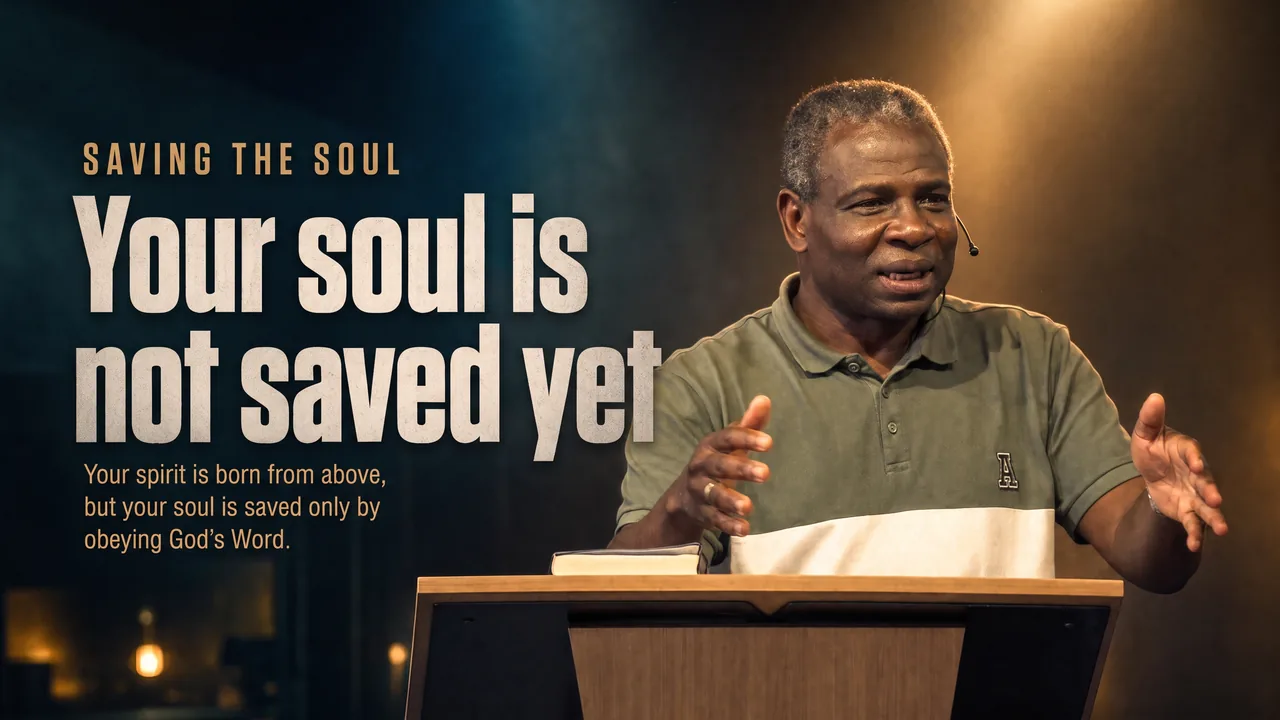
- When we are born again, the life of God dwells in our spirit.
- The soul – mind, will, and emotions – still requires ongoing salvation and transformation.
- The Word and the Holy Spirit work to change the soul as we humbly receive truth.
James 1:21 Therefore, get rid of all moral filth and the evil that is so prevalent and humbly accept the word planted in you, which can save you. (NIV)
- The word planted in us saves when received with humility.
- The soul can hide behind walls and strongholds; until those are removed the life within cannot fully express itself.
- Serving from the soul or for self leads to disappointment; God calls us to live from the spirit and God’s wisdom.
Matthew 16:25 For whoever wants to save their life will lose it, but whoever loses their life for me will find it. (NIV)
- To save your soul by clinging to it is to lose it; salvation of the soul is letting go and trusting God.
Matthew 16:24 Then Jesus said to his disciples, “Whoever wants to be my disciple must deny themselves and take up their cross and follow me.” (NIV)
- Deny self, take up the cross daily, and follow Jesus.
- Practical obedience means seeking God’s will before acting rather than relying on personal impulse or “good ideas” that can become traps.
John 12:24 Very truly I tell you, unless a kernel of wheat falls to the ground and dies, it remains only a single seed. But if it dies, it produces many seeds. (NIV)
- Death, hiding, discomfort, and apparent loss are often the necessary processes by which life and fruitfulness are released.
- Fear of losing comfort or pride can keep us fruitless.
The way of discipleship – surrender, seasons, and leadership
John 21 – two phases of life and the call to follow
John 21:18 Very truly I tell you, when you were younger you dressed yourself and went where you wanted; but when you are old you will stretch out your hands, and someone else will dress you and lead you where you do not want to go. (NIV)
John 21:19 Jesus said this to indicate the kind of death by which Peter would glorify God. Then he said to him, “Follow me!” (NIV)
- Jesus describes two phases: a youthful phase of self-rule and a mature phase of surrendered leadership under Christ.
- Spiritual maturity includes readiness to deny personal leadership and follow the Lord even into places our human nature would not choose.
Led by the Lord, not by self
John 10:27 My sheep listen to my voice; I know them, and they follow me. (NIV)
John 10:5 but they will run from him because they do not recognize the voice of strangers. (NIV)
Luke 6:46 Why do you call me, “Lord, Lord,” and do not do what I say? (NIV)
- Jesus wants to lead; calling him Lord requires hearing and obeying his voice.
- Obedience is costly and involves struggle, as seen in Jesus’ own prayer.
Matthew 26:39 Going a little farther, he fell with his face to the ground and prayed, “My Father, if it is possible, may this cup be taken from me. Yet not as I will, but as you will.” (NIV)
Matthew 26:31 Then Jesus told them, “This very night you will all fall away on account of me, for it is written: ‘I will strike the shepherd, and the sheep of the flock will be scattered.'” (NIV)
Matthew 26:33 Peter replied, “Even if all fall away on account of you, I never will.” (NIV)
- Peter’s impulsive love and self-reliance illustrate the immature phase; his later call to follow into a different kind of death illustrates mature surrender.
- True discipleship is surrendering the will to God’s will.
Serving without stress – connection to Christ’s life
- If we learn to connect to the life of Christ within, service will not be driven by stress.
- Stress in ministry usually indicates reliance on soul resources instead of the life of Christ.
- Examples and testimonies of leaders who did not burn out point to this principle.
Practical readiness – surrendering possessions and preferences
- Full surrender includes readiness to give away even treasured possessions when God asks.
- Personal testimony: giving away a beloved suit in Minsk and subsequent events that taught the preacher to love enemies and acknowledge the Lord’s ownership of life and belongings.
Prayerful response – confession, humility, and commitment
- Prayer asking the Holy Spirit to open hearts so revelation that brings peace and freedom is not hidden.
- Confession for attitudes that block spirit of wisdom and revelation.
- Commitment to humility, openness, and allowing God to reveal and fulfill his plan for individuals and the church.
Conclusion – signs of maturity and the ongoing path of discipleship
- Core conclusion: a submissive life is the sign of true discipleship.
- Maturity shows itself in full surrender to the Lord, readiness to be led where we would not choose, and living from the spirit rather than the soul.
- Final exhortation to examine hearts, receive the planted word, deny self, follow Jesus, and allow God to shape and release the life within for fruitfulness and unity.