Flee, resist, fight – the road from slavery to life in God’s Kingdom
Livestream: youtu.be/-2tgPhw2PSk
June 14, 2026
I’m glad to see so many of you. Take the best seats. The best seats are in front, next to me, in front of me. Praise the Lord. It’s not easy to be here, and maybe it shouldn’t be, because God always calls us to leave our comfort zones. Only there does growth happen, and God wants to see growth in us.
I will get straight to the point. We had a fantastic word on Sunday, and even more fantastic prayers on Thursday. I will continue with these words, or with these thoughts, that Pastor ended the services with.
The Purpose of God
The purpose of God for me and for you, for every believer, is not just the forgiveness of sin, but it is a complete transformation of ourselves into the image and likeness of our Father, so that through sons and daughters God can establish His Kingdom on Earth. All of that is a movement; it’s a process.
As we sang, it is impossible for us to understand what this means: to see our sin at the cross, but our sins are forgiven. But God doesn’t want us to stop there. I heard somewhere that many believers think that the forgiveness of sin is like an insurance, like life insurance, that if anything happens, at least my life is insured.
On Thursday, Pastor asked a practical question. If Jesus came to the area of Lielvaarde and Ogre and he would live here, who was on Thursday’s prayer here? Well done. I think that each of us knows the answer: what would happen? Everything would change. The sick would get healed. The bound would be set free. People who have lived in fear for years would be set free. Our city would be transformed.
But we don’t see that. We expect that; we want that. And I had a question. But Jesus lives within us. He said in His Word that I will be with you every day. He said to His disciples, that means that He also says that to us.
The Temple of God
Whoever believes in me will do the works that I do, and even greater works than what I did. But then, why does that not happen in Latvia? Why is Latvia not transformed? Why do we, who know God, not look like people whom God is able to transform, and through whom He can also transform the city?
God says in His Word, didn’t you know that you are the temple of God where the Spirit of God wants to dwell?
1 Corinthians 3:16 Do you not know that you are God’s temple and that God’s Spirit dwells in you? (ESV)
Don’t you know that the Spirit of God lives within you? It is written that all the fullness of God delighted to dwell in Him. It is a powerful revelation. It means that God had joy to dwell in Jesus; He delighted. Jesus was such a temple, such a home, where God felt good, and therefore, through Jesus, the Kingdom of God could multiply with power and authority.
Is God Pleased to Dwell in Me?
When I meditated on this and came before God with it, I asked God, “Is it pleasing to you to live within me? Do you feel at home in me? Lord, do you have room there? Is my spiritual temple too small? Have I not filled it with unnecessary things?”
Clearing the Temple
The problem is not in God. If there is chaos in our temple, if we have gathered many different things there-our baggage, our burdens, our parties 24/7-when God enters the temple, He takes all the available space. But if there is chaos and some rooms are locked, He can’t get in there. God must be the Lord over all. But if we don’t let Him in fully, then the power of God cannot express through us fully.
We must understand that we must throw some things out of our temple. We must let go of some relationships, or some doors must be locked open. Maybe some rooms must be cleansed and cleaned. But for you to be able to do it, you must free the temple so that it could be fully prepared for Him.
Freedom from Sin
Jesus says, “Everyone who sins is the slave of sin.” And the pastor said, “The purpose of God is not just to forgive our sins; that is just the beginning, the first step.”
God’s Transformative Process
God wants to fully transform us so that through us, as mature sons and daughters, He can establish His Kingdom. The fact that we must pay a price, walk through hardships, and let go of some things is not a choice; it is a condition for us to grow.
A Divine Revelation
When the pastor entrusted me to lead the service, I prayed to the Holy Spirit. I asked, “What is the word that I must hear, that we must hear, understand?” The first three words that came into my spirit were Egypt, desert, and Promised Land. I asked the Holy Spirit, but I didn’t receive an answer.
On Tuesday, I prayed again and asked, “What must I do with these words I don’t understand?” Tuesday, Wednesday, and Thursday passed by. I have been in Egypt. I have seen the desert. I reached the Promised Land. On Thursday, the Holy Spirit told me, “Maybe open up your Bible and study it.”
I started to open up the Bible and read some scriptures, and I tried to understand. I couldn’t understand what that had to do with the Kingdom of God. Maybe I don’t understand and can’t put it together in my mind. I want to share with you. Please take your comfortable seats.
Egypt, Desert, and Promised Land
So, Egypt, desert, and Promised Land. Egypt: run. The desert: avoid. The Promised Land: fight. It is a process of God, how God works with us, how He leads each and every one of us from glory to glory. He makes us holy. He leads us from children to maturity, to full maturity and likeness of Christ.
This process refers to some things. It refers as much to the values of our lives as it does to the fruit of our lives, which is this likeness of Christ.
Galatians 5:22-23 But the fruit of the Spirit is love, joy, peace, longsuffering, kindness, goodness, faithfulness, gentleness, self-control. Against such there is no law. (NKJV)
Our values determine the fruit that we can bring. Therefore, where is our route? Some seek the way back to Egypt. When we understand where we are in this process-in Egypt, in the desert, or in the Promised Land-clarity comes to what we should do. Because in each of these phases, there’s a certain action that we must take. When we grow in our maturity, we grow in our responsibility, and the consequences change.
The Call to Transformation and Freedom from Egypt
Transformation is not just a movement forward; it’s entering a greater maturity, greater responsibility, and a greater reign of God. Latvia waits for people in whom God not just dwells, but through whom His will can be freely revealed and fulfilled. Therefore, the first concept we will discuss is Egypt, the house of slavery from which God is calling us and making us to run. That is the first point.
Egypt: A Geographical Place and Spiritual Symbol
Biblically, Egypt is a real geographical place but also a spiritual symbol. Egypt is not always the villain. In the times of Joseph, Israel took refuge there from the famine. Also, when Jesus was little, the angel told him to run to Egypt. But there comes a time when Egypt becomes this villain, and God says, “Run from that place.”
What Egypt Symbolizes
Egypt can symbolize four things. I won’t go into details; I will just name them:
Sin as Slavery
Egypt is a life under a foreign lord, a different owner, characterized by fear, control, and the flesh. It is a system that enslaves you. Therefore, the Bible says that everyone who practices sin is a slave of sin.
John 8:34 Jesus answered them, “Most assuredly, I say to you, whoever commits sin is a slave of sin.” (NKJV)
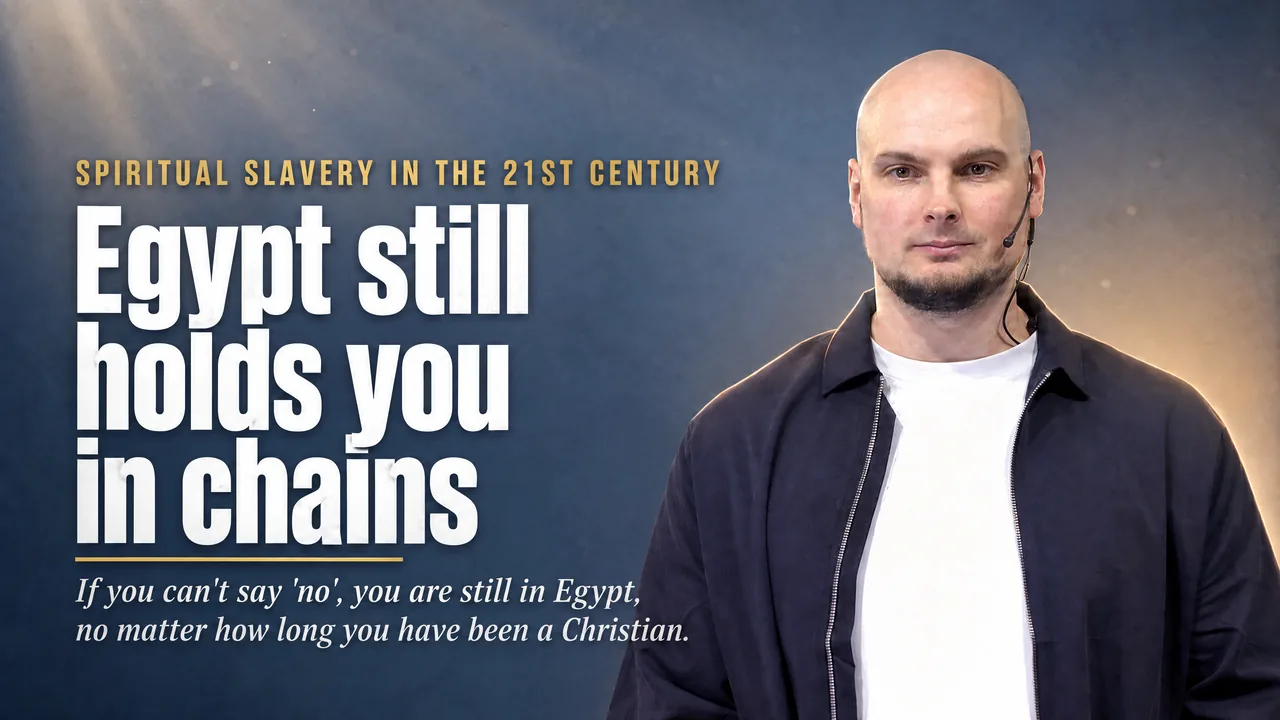
In simple words, sin is anything that controls you outside of God. If you can’t say no to alcohol, for example, to smoking, to pornography, or for youth, to sniffing or snuffs, you are enslaved. You are a slave of sin, and you are in Egypt in some area of your life.
The Reality of Life in Egypt
Of your life. And living there, you think that you make your own decisions. But the reality of life is that Egypt chooses for you. Not that in the season of Egypt, life is bad. There is work. There is a roof overhead. Sometimes a boss whips you or gives you more hours to work, or maybe you are not allowed to take a vacation when you want to. But all in all, it’s okay. “God blessed me with this work.”
Relationships and Friends
Or for example, with relationships or with friends that maybe do things that they shouldn’t, or lead you in a direction where they shouldn’t. Therefore, Egypt is our life before we come to Christ. We admit Him as our Lord and Savior.
Running from Immorality
When in the New Testament we read, “Run from immorality,” “Run from youthful lusts,” and Paul says to Timothy, “But you, a man of God, run from all those things.”
1 Corinthians 6:18 Flee from sexual immorality. Every other sin a person commits is outside the body, but the sexually immoral person sins against his own body. (ESV)
2 Timothy 2:22 So flee youthful passions and pursue righteousness, faith, love, and peace, along with those who call on the Lord from a pure heart. (ESV)
The First Command: Run
You can’t feed the lust of your eyes and at the same time pray. Therefore, from Egypt, the first command is not to stand before Pharaoh and talk to him, have a conversation. It’s not to refuse him or it’s not to fight him, but it’s to run.
Examples of Heroes: Joseph
Consider examples of the heroes of the Bible. The most prominent example is Joseph when he served in the house of Pharaoh. Potiphar’s wife wanted to sleep with him. And what does the Bible say? He ran so that his clothes stayed in her hands.
Run from Egypt, run from sin. Run from the old life.
Jesus Leads Out of Slavery
Jesus, like Moses, when he came to Egypt, as Moses said, “Come with me to Israel, people.” So Jesus said to his disciples, “Follow me,” and led them out of slavery. The disciples, in a way, were slaves of Rome. They were in debt because of their taxes. And what does Jesus do? He takes care of their debt.
The Motive of Freedom
with this fish that had a coin in its mouth. The same motive is present in Egypt. Just as God gave silver and gold to the people of Israel so that they could take care of their debt and be free, so our debts are paid for and taken care of so we can be free. And Jesus says, “Follow me.”
A man cannot save or set themselves free. God redeems us and delivers us.
Pharaoh in the 21st Century
In the 21st century, is it interesting to you? Pharaoh is not dead in history; he has just changed his name. Egypt can represent a desire for pornography, secret relationships, a double life, material things as safety, anything that enslaves you, anything that you can’t say no to.
To youth, it is followers and likes, a desire to please people, accomplishments, or a career. If that enslaves you, that is Egypt.
The Simple Test of Enslavement
And the test is simple. If that controls you, if you can’t freely obey what God tells you, if these things hold you in chains, you are in Egypt; you are locked in sin. You can call it anything you want, you can excuse it any way you want, but God says, “Run.”
Don’t deny it; run. Don’t hold back.
The Wilderness: Oppose and Resist
Wilderness is the second great point. In the wilderness, God says, “Stand back or fight.” Oppose, resist.
What should you oppose or resist? The things that you ran from.
Wilderness is between the old life and the path to this promise, through the slavery that you are set free from and this inheritance that you have not yet received. And that is a place where we are out of slavery, but we have not learned to live freely. Know the truth, get to know the truth, and the truth will set you free.
Wilderness Challenges and Growth
Wilderness carries tests in itself-temptations. It challenges us to wait and to trust God. It makes us grow in our trust in God because it creates character. It strengthens us. It builds maturity in us.
The Wilderness: A Place of Encounter and Transformation
The wilderness, compared to Egypt, is a quiet place. It is a place where God desires to find you, and your challenge is to find Him. God will teach you, He will father you, He will feed you, and He will discipline you. The wilderness is where your true colors are revealed.
God’s Purpose in the Wilderness
Deuteronomy 8:2-3 And you shall remember that the Lord your God led you all the way these forty years in the wilderness, to humble you and test you, to know what was in your heart, whether you would keep His commandments or not. So He humbled you, allowed you to hunger, and fed you with manna which you did not know nor did your fathers know, that He might make you know that man shall not live by bread alone; but man lives by every word that proceeds from the mouth of the Lord. (NKJV)
The wilderness is not a process to run from; it must be walked through. It is where the maturity of Christ is being created in us. It is where the character of God’s sons and daughters are created in the likeness of Christ.
Israel’s Experience in the Wilderness
What did the people of Israel do in the desert?
The people of Israel experienced more in the wilderness than any other nation. They saw manna from heaven, water from the rock, a cloud of God by day, and a pillar of fire by night. They were at Mount Sinai, and they experienced the holiness of God, the patience of God, and the discipline of God. They saw everything a person could wish for, but again and again, they behaved wrongly; they complained. They did not see the promises of God. They accused God of leading them out to the desert to die.
When you cannot wait to see Disneyland, Israel could not wait to see the Promised Land. And they literally did not. They heard about the giants, and they refused to enter the Promised Land.
Resisting Temptation in the Wilderness
Therefore, in the wilderness, you must oppose.
James 4:7 Therefore submit to God. Resist the devil and he will flee from you. (NKJV)
From Egypt, you run; in the wilderness, you oppose. We are free from sin in the wilderness, but we must stand against temptation. In the wilderness, the enemy comes to remind you of the past. Do you remember how good it was in Egypt? God has left you. But that is not true. You must oppose these thoughts.
The Importance of Resistance
To oppose order is important. First, submit yourselves to God, and then resist the devil. Resistance doesn’t start with our willpower; it starts with surrendering to God. The strength to resist the devil starts with you putting yourself in the hands of God and remaining in His Word. As Jesus said, “If you remain in my words, you are my disciples.”
Resisting in the Wilderness
In the wilderness, we must be aware, because the greatest threat is not some troubles or hardships. Rather, the greatest threat is what the enemy tries to convince us about God.
1 Peter 5:8 Be sober, be vigilant; because your adversary the devil walks about like a roaring lion, seeking whom he may devour. (NKJV)
Resist him, standing firm in the faith. In the wilderness, you don’t resist God, you don’t resist the process of God, or the people around you. But in the wilderness, you resist unbelief, complaint, and the willingness to return to the old life-a temptation to accuse God and to believe what the enemy says. In the wilderness, you say, “God, I don’t know how You will make it happen, but I won’t go back to Egypt. I will remain faithful to You. I will remain in Your Word, and I will seek Your face.”
The Battle of Resistance
This battle is not easy. We haven’t even gotten to the battle yet; we just think about standing against, resisting.
Hebrews 12:4 You have not yet resisted to bloodshed, striving against sin. (NKJV)
Jesus in the garden, when He prayed so eagerly that His sweat turned into blood, illustrates this. In Hebrews 12:4, it says, “You have not yet resisted to the point of shedding your blood.”
David’s Example of Resistance
The Bible’s examples about the wilderness include David. He was already an anointed king, but for a long time, he didn’t live in his castle. He hid in the caves and ran from Saul. He had a promise, but he didn’t yet have the throne. And the temptation that he had to stand against? He had the opportunity twice to kill Saul. Humanly, we could say, “God gave Himself an opportunity to take my promise.” Wasn’t it so?
But David resisted revenge. He resisted impatience. He resisted the desire to have power.
1 Samuel 24:7 So David restrained his servants with these words, and did not allow them to rise against Saul. And Saul rose from the cave and went on his way. (NKJV)
The Wilderness as a Test
The wilderness is a test for everyone. Will you allow your values and the fruit of your spirit to be tested? Will you receive this process of God that transforms you? Will you prepare yourself for the promise that God has promised?
You will try to make it happen through your fleshly methods. The wilderness made David not just stronger in battle, but he also became closer to God. Reading all the Psalms, he learned to trust God, following the example of Jesus.
Jesus’ Example in the Wilderness
After baptism, just as the people of Israel walked through the Red Sea, so Jesus received water baptism, and the Holy Spirit led Him to the desert. Jesus was not there out of disobedience, but because of the will of God and the leadership of the Holy Spirit. For 40 days, He fasted, and then the devil tempted Him. You know how it ended: Jesus resisted the temptation, and He resisted with the Word of God.
It is written. It is written. Three times He resisted, and the enemy left Him.
Disciples’ Wilderness Experience
And so, disciples were led through this period of wilderness.
Luke 9:3 And He said to them, “Take nothing for the journey, neither staffs nor bag nor bread nor money; and do not have two tunics apiece.” (NKJV)
Today, when I want to leave the house, do you take your bag? Do you take your keys? Do you take something to drink? An umbrella?
Jesus said, “Don’t take anything.” Why? Because you must walk through the desert, and you must learn to trust God that He will take care of you.
The Wilderness: Trusting God’s Provision
God Trains Us in the Wilderness
God will provide for you, and that is a process. Many things happen in the wilderness that God uses to train us so that we could receive what He has promised. We are not yet even talking about the battle. In the wilderness, God teaches us not to feed our old self, but to resist it with His Word and with prayer.
I will skip the wilderness in the 21st century for now – you can ask me after the service, otherwise I will be here all day. Why did I lead such a long service?
Rooting Yourself in the Word
In the wilderness, it is important to sow the Word of God in you so that your roots go deep into the Word. Jesus overcame with the Word of God, and we too must be able to resist and stand firm with the Word of God.
Romans 8:15 For you did not receive the spirit of slavery to fall back into fear, but you have received the Spirit of adoption as sons, by whom we cry, “Abba! Father!” (ESV)
The Promised Land: Fight for Your Inheritance
Crossing the Jordan
And then we come to the river of Jordan, where things change and where God says, “Now it is time.” If in the wilderness you had to resist, then in the Promised Land you must fight. The Promised Land symbolizes the inheritance that God wants to lead you into. It is where the promise of God becomes your responsibility.
If in Egypt there is slavery that you must run from – from sin – and the wilderness is a place where you must resist temptation, sin, and the lies of the enemy, then the Promised Land is where you must fight for what God has promised you.
A New Level of Maturity and Warfare
I used to feel that the Promised Land was a beach and cocktails. But the Promised Land does not start with retirement. The Promised Land, when you have been matured in the wilderness, is a new level you enter – new maturity, new responsibility, and new spiritual warfare that you must practice. It is where you must put into practice the things you learned in the wilderness.
God has given you a promise. God has promised you an inheritance. But you must take hold of it. God gives you authority, but you must exercise it. God gives you victory, but you must gain it. You must invade it.
Israel Crosses the Jordan
And when Israel went through the Jordan, Moses said:
Deuteronomy 9:1-3 Hear, O Israel: you are to cross over the Jordan today, to go in to dispossess nations greater and mightier than you, cities great and fortified up to heaven. (ESV)
Facing Giants
The people are strong and tall, Anakites. You know about them and have heard of it. Who can stand up against Anakites?
Those are not childish games anymore. We’re not talking about being tempted by pornography, or being lazy, or being addicted to social media. We are talking about serious things, about giants, about spiritual war.
Let’s see further.
God’s Promise and the Battle
Deuteronomy 9:3 But be assured today that the Lord your God is the one who goes across ahead of you like a devouring fire. He will destroy them; he will subdue them before you. And you will drive them out and annihilate them quickly, as the Lord has promised you. (NKJV)
It is the second generation that God speaks to. The first generation that saw the giants they had to war with got afraid. They refused to enter the Promised Land. And now God says to the new generation, “I have promised this to the first generation. The same I promised to you, because victory is the Lord’s, but the war, the battle, is yours.”
And here are two sides: He will destroy them, and you will drive them out and annihilate them. But you must take your sword. That is the purpose and meaning of the Promised Land. Victory belongs to God, but the battle is mine and yours.
The Assignment in the Promised Land
What did the people of Israel do in the Promised Land? They couldn’t just reside there or make a home there. The first thing that God said to Joshua, “Be strong and courageous,” God repeated that three times in Joshua 1. The people of Israel shouldn’t just live peacefully there in the Promised Land. They had a specific assignment.
And I will call these assignments. The first was to inherit the land. And as I call all these, keep in mind which of these things the people of Israel did, what they didn’t do, so that you understand what we must do, what God expects from us, just because they didn’t.
Inheriting the Promised Land
And so, if we don’t do it, our children’s children will do it. The first step is to inherit the land. God had promised this land, but Israel had to walk in faith. They had to obey God, and they had to invade what God gave and promised them, step by step, city by city, battle after battle. This required them to trust what God had said, to do what they didn’t want to do, to do what they didn’t like to do, simply because God said so.
Letting Go of Idolatry
Second, let go of idolatry. The Promised Land was full of a lifestyle that was opposite to God’s will. The people of Israel had to destroy all the altars of idolatry. They had to protect their entire being from starting to worship all these idols.
Living According to God’s Law
Third, to live according to the law of God. God didn’t just want a nation in a territory; God wanted people who lived with God’s laws written in their hearts, who lived according to the order of God in family, in society, in work, and in celebrations.
Serving the Lord
Fourth, serve the Lord. In the center of the Promised Land was not just a land by itself, but God. There had to be a presence of God, worship, and obedience. It had to be at the center of the people of the nation.
Being a Testimony to Other Nations
Fifth, to be a testimony for other nations. The people of Israel had to show what it looks like for a nation to live in the kingdom of God, where God is king, where worship is holy, and where living is righteous. In short, the Promised Land wasn’t just a blessing to receive, but it was a responsibility to live in.
The Three Stages: Run, Resist, Fight
Run from Egypt, resist in the wilderness, and fight in the Promised Land. This principle helps us to understand this path. If we look at the heroes of the Bible, we see that each of them walked through these three places. In each of these places, God teaches a different attitude towards that place, because the same action in a different season can become a trap.
Run from Egypt. You cannot overcome in slavery. You don’t have weapons; you don’t have instincts. Therefore, God doesn’t say, “Fight in Egypt.”
The Journey from Slavery to Freedom
He says, “Run from it.” In the wilderness, resist. You are not a slave anymore, but you still learn what it means to live in the freedom of Christ.
What does it mean to know the truth?
Truth is a Personality, and this Personality is Jesus Christ. Getting to know this Personality of Jesus Christ gives you freedom. Therefore, God teaches us to resist unbelief in the wilderness, fear, temptations, and the lies of the enemy. We must learn to know His voice, to hear what His voice sounds like, what His voice is like.
The closer you are to Him, the more quietly He speaks to you, because He wants you to approach Him. If God speaks to you clearly, it means you are far from Him and cannot hear. But when you approach Him, He might whisper to you, and you can see Him beside you. Sometimes He doesn’t even have to say anything; you just see Him next to you, and you see His character, His holiness. Therefore, remain faithful to God in the wilderness and do not go back to Egypt.
Resisting Fear and Temptation
Why must you resist fear?
Because there are giants in the Promised Land that are ready to pull your head off. There is an enemy who is ready to accuse you. You must be smart. You must have the right instincts on how to act.
And therefore, in the Promised Land, God says, “Fight.” In the Promised Land, God doesn’t say, “Run.” God doesn’t say, “Resist.” He says, “Go and invade.” That is a place where you must fight for the promises of God, where these giants must be overcome, where you must practice the likeness of Christ, and you must practice your identity.
The Craftiness of Sin
And so Paul gives this command: be armed with all the weapons of God so you can stand against the craftiness of sin.
Why craftiness?
In the wilderness, it was easy to recognize sin and foolishness, but in the Promised Land, the enemy becomes crafty. You won’t have time there to open your Bible and read what the Bible says about that. You will be dead. You need to have the instinct of the Spirit.
Ephesians 6:11 Put on the whole armor of God, that you may be able to stand against the wiles of the devil. (NKJV)
It is written. It is written. And it must come right away. In war, you don’t have time to look for where your weapon is, where your umbrella is. You must have the instinct.
The Good Fight
Because you do not war against flesh and blood, but against principalities and authorities, against the rulers of the darkness of this world, and against the evil spirits in the world. It is the good battle that we are called to. And that is not war against people, but against sin, against darkness, and against anything that opposes the will of God in our lives.
Fight the good fight of faith; lay hold on eternal life. So you can war and battle with courage, so that you are not in fear of your life, because you belong to the Lord; you are dead to yourself. That is what you are called for.
The Promised Land: A Place of Battle
In the Promised Land, you must fight, and you will fight. If you think that in the Promised Land you will have no challenges there, and you will just simply sip your cocktail, it is a great mistake. The Promised Land is not a place without the enemy, but it is a place where authority is given to you and resources to overcome the enemy. And this authority you must apply as a son of God.
Higher Stakes and Consequences
What you must understand in this season is that the stakes are higher and the consequences are much more serious. In the wilderness, you could complain in your tent; maybe you would starve for three days without manna. But in the Promised Land, one mistake, or not even a mistake, but disobedience, the consequences of one act of disobedience can be much harder.
I do not want to scare you, but maybe you want the scary scriptures, one or two.
David was a king; he already ruled and was on his throne. And he decided to count the people. Do you remember the story? He was told, “No, don’t do it.” Simple disobedience, and 70,000 people died.
2 Samuel 24:15 So the Lord sent a plague upon Israel from the morning till the appointed time, and from Dan to Beersheba seventy thousand men of the people died. (NKJV)
This was in the Old Testament. The New Testament also has examples. And I think you know what happened. And when you complain to God and you say, “Why is there this stagnation in my life?”
The Journey to the Promised Land
Grow. Resist. Run from sin. Resist it until you become holy, from glory to glory. Show your mature character in Christ, so that you can be trusted.
Entering the Promised Land
That you won’t refuse to enter the Promised Land when you will have to make a decision that you don’t want to?
How do you know when you approach the Promised Land?
Do you care to hear?
When you have walked through the desert, you grow in your maturity, and you have learned to trust God, which means that you even know the voice of God in your life; you are a disciple. Someone can send you somewhere, and you obey with joy. You have learned to stand against sin, and you have learned to stand against the devil. Through this process, your mistakes are being corrected more often.
In this teaching that you have learned in the wilderness, in the Promised Land, expenses will be higher. Because everyone who is given much will be asked for much. And from everyone who has been given little, even more will be asked.
Because the one who loves the Lord, God will rebuke such a person. Therefore, it is dangerous to relax in the Promised Land.
Three Trade-offs in the Promised Land
We had a wonderful word of God, I think it was in 2014, about giants, about these eight nations that Israel must overcome.
First Trade-off: Living on the Border
First is to live on the border. I will start with the conclusion. You will see the scriptures in my notes. The first trade-off is to remain on the border. They didn’t refuse to fight. They took part in all the battles, but they chose to remain on the other side of Jordan. And that is a life beyond the border. Because of that, they started to mix with those around them; they started to turn away from God. And they were the first ones that were invaded and sent off. And that is the first trap: to stay between the wilderness and the Promised Land.
It’s as if you serve with all your heart in the church, but on the other days of the week, you do your own thing. And there are consequences in the 21st century. In the beginning, this border doesn’t look dangerous.
The Dangers of Lukewarmness and Compromise
But if you haven’t stepped across this Jordan, yes, you can still come to church; you can still serve. For a long time, you will speak right things, but your values will change slowly. You will start to accept a worldly mindset. The fruit of your spirit starts to trade off. You start to become lukewarm; you have a spiritual laziness, and it happens to those who choose to live on the side because they move further away from this center where God lives, from the Word of God, from obedience, and from correction.
The Second Trap: Sealing a Deal with the Enemy
The second trap is to seal a deal with the enemy.
Joshua 9:14 Then the men of Israel took some of their provisions; but they did not ask counsel of the Lord. (NKJV)
It is a story where the Gibeonites fooled the army. They wore old clothes and had old bread, and they fooled the people of Israel when they sealed a deal with them. The enemy is crafty in this. That one choice of yours without God can make you fight battles that God didn’t even intend you to fight. In the 21st century, this can look like a choice that, in the beginning, can seem harmless. You didn’t consult the Holy Spirit if that was the right decision.
Relationships that you maybe know you shouldn’t have, friends that you know God is not the center of their hearts, some hidden secret conversations, or a wrong environment. Do we make decisions based on what is more pleasing or convenient for us?
The problem starts where we make decisions without consulting with the Lord. In the beginning, it might seem like nothing, not much, but later it can become a problem. It steals your peace, focus, and prayer time, and it upsets your mind. Therefore, in the promised land, don’t hurry before you bind your heart to somewhere. Bring it before God.
The Third Trap: Leaving the Giants Alive
And the third trap that the enemy tries to deceive us is to leave the giants alive. These are the things that people say about, “It’s not that bad; we can live with it.” But the Bible warns us that the things the people of Israel didn’t destroy later became a problem for them. So in our lives, undealt sin, fear, or the things that you live to overcome tomorrow that you could overcome today, can start to rule over you. The border brings you further. A wrong deal binds you, and a live giant starts to control you.
Take the example of David, where he relaxed in the Promised Land. David was a warrior.
The Consequences of Relaxation
David’s Failure to Act
2 Samuel 11:1 In the spring of the year, at the time when kings go out to battle, David sent Joab and his servants with him, and all Israel. And they ravaged the Ammonites and besieged Rabbah. But David remained at Jerusalem. (ESV)
When the year had passed, in the spring, at the time when kings go off to war, David sent Joab out with the king’s men and the whole Israelite army. David relaxed. He had to go to war because the year had passed; it was time to go to war. Do you know what happened when he relaxed?
2 Samuel 11:2 It happened, late one afternoon, when David arose from his couch and was walking on the roof of the king’s house, that he saw from the roof a woman bathing; and the woman was very beautiful. (ESV)
One evening David got up from his bed and walked around on the roof of the palace. From the roof he saw a woman bathing. The woman was very beautiful. The fact that she was very beautiful was not a problem. The problem was that he relaxed. When he had to run, he did not run. When he had to resist, he did not resist. And in the story, those consequences were heavy: the adultery, the murder to cover it, and destruction in his own family.
Discipleship and Changing Seasons
Looking at the example of the lives of disciples, when God said in the wilderness not to take anything with them, when Jesus sent disciples to evangelize by two, he said, “Don’t take anything with you.” Learn to trust God. But see further, when they went to the next level, Jesus told them:
Luke 22:36 He said to them, “But now let the one who has a moneybag take it, and likewise a knapsack. And let the one who has no sword sell his cloak and buy one.” (ESV)
If before Jesus said not to take anything with them, now seasons change. Now Jesus says, “But if you have a purse, take it and also a bag, and if you don’t have a sword, sell your cloak and buy one.” In the promised land, manna does not come from heaven anymore. You must work, you must plan, and you must use all the resources of God, given by God at the right time. And if you buy a sword, be ready for a battle.
Dangerous Mistakes
Fighting in Egypt
What happens if you fight in Egypt? If you try to overcome temptation with your own strength, you will lose; you will be defeated.
Running from the Wilderness
What happens if you run from the wilderness? That is the place where God wants to create your character, to teach you to listen to His voice, how to mature you, and disciple you in maturity. To run from the wilderness means to run from the discipline. It means to leave what God leads you through. You don’t suffer through it with dignity. You skip the process where God wants to prepare you.
God’s Discipline and Transformation
And because God tries to teach you, it’s a sign that God raises you as a daughter or a son. As the Word of God says in Hebrews, “suffer through the discipline.” God treats you like sons.
Hebrews 12:7 Endure hardship as discipline; God is treating you as his children. For what children are not disciplined by their father? (NIV)
The Battle in the Promised Land
What happens if you wait in the Promised Land? You must fight in the Promised Land against specific giants: against fear, against Mammon, against things that dictate your decisions, against pride, against the past, against compromise. But do you sit and wait for God to overcome your place?
Or do you wait for a job but don’t send out your CV, or you send out your CV but no one receives it? Or do you not know how to do anything because you didn’t walk through the wilderness and didn’t learn anything?
Therefore, we must ask God for forgiveness, no matter what season we are in. In every specific area of life, must we run? Must we suffer through this test where God takes us as clay vessels and forms us? Or must we take this spiritual sword and go to war?
Why the Journey?
Why is all of that necessary? Why Egypt? Why the wilderness? Why the Promised Land?
Because the purpose of God is not just to save you. But the purpose of God is this process through which God wants to transform you and make you like the Son of God, and to give you this authority so that you can rule. And for that purpose, each of these seasons serves.
Through repentance, God has led you out of Egypt, out of slavery. Run from it and don’t look back. God leads you through the desert to destroy your pride through hardships, through tests, to create Christ’s character in you. Therefore, you learn to stand against the devil. Resist sin even to the shedding of blood.
And then God leads you into the Promised Land, giving you this authority and identity in the likeness of Christ. Therefore, you learn to defeat the giants so that you can finish the work, so that the kingdom of God may be established on earth, to fight this good fight of faith.
A Personal Question
And it’s not just a question about the people of Israel; it’s a question for each of us. Where am I? Am I in Egypt? Is something holding me in captivity and ruling over my life there?
The Call to Freedom and Discipleship
Running from Enslavement
What is that sin that I excuse? What is the habit that I hide, the voice that I listen to more than the voice of God? If it is so, then God doesn’t say to you, “Buckle up.” He says, “Run.” Run from the place that enslaves you, and close every door. Don’t let your root spread back to Egypt, because freedom is given to you. Run from Egypt.
Standing in the Wilderness
Maybe you are in the wilderness already; you have left the old life, but you still feel a new desire for the old mindset. Maybe you have been in the wilderness for such a long time that you are tired and you don’t see the fruit. You hear the voice that tells you, “God has forgotten about you. Go back. It was easier.” But God today tells you to stand against, not God, not this process, not the discipline, but stand against fear and unbelief. Stand against the lies of the devil. Remain in the Word of God. Remain in obedience as a disciple. Remain faithful until the end, because the wilderness is not a place where God left you. That is the place where God meets you and forms you as a mature son.
Invading the Promised Land
God says, “Go and invade the promised land, because the victory belongs to the Lord, but the battle is ours.” Maybe in some areas of life we have already entered the Promised Land, but you have been given an assignment and authority. Maybe some people are interested in you: family, ministry, finances. See these generations. But God doesn’t tell you today to sit and wait. He says, “Take your sword and fight for it. Fight this good fight of faith.” Don’t seal a ceasefire with giants. Don’t live on this border. Don’t get used to the compromise. Don’t give the enemy the territory that God has entrusted to you.
Discipleship in Latvia
You know that Latvia doesn’t need more Christians. Latvia needs more disciples, more sons and daughters of God, where God lives. Not just people who have received this insurance, life insurance, but people who have let God transform them through hardships, through suffering, through challenges. People that talk about the kingdom of God.
Bringing the Kingdom
People who bring the kingdom of God into their homes, their workplaces, their schools, their cities, and their relationships. That doesn’t just talk about the kingdom of God, but brings it.
Lord, show us. Show me where I am. Show me my Egypt. What are the things that hold me in captivity, Lord?
Maybe I want to be held captive. Show me what I must leave and what I must resist. Lord, show me my giants so that I can take your sword of the Spirit and overcome them. Lord, give me grace to obey your voice.
The Call to Action
If we must run, Lord, let us run. If we must stand against, let us stand against today. If we must fight, let us get up and fight today. Not in our strength, not in our righteousness, not in our name, but in Christ. But in Christ, because you have worn Christ; you wear Christ.
Maturity and Establishment
Walking through the hardships of wilderness challenges, make us mature sons and daughters so that through our lives your kingdom may come and be established. We thank you, Father, that your kingdom is a process, a process that we walk through, and through which, by walking, we establish your kingdom.
We thank you, Holy Spirit, for wisdom, that you are with us, that you speak to us. Thank you, Jesus, for leading us out of Egypt. Our sins are forgiven, and we don’t have to look back. We thank you, Lord. In the name of Jesus Christ. Amen.